English
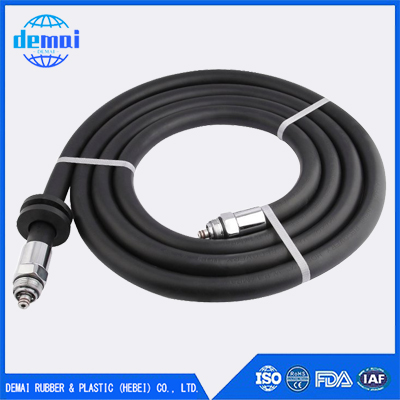
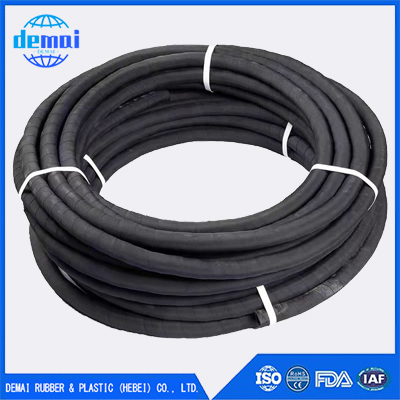
Fuel dispenser hose, that is, the special oil pipe for fuel pump, is a kind of industrial hose, which is suitable for transporting gasoline and diesel oil at room temperature, including oxidized fuel oil (up to 15% oxygenated compounds), and gasoline containing a small amount of additives.1. Basic performance introduction 1. Form According to the structural form, the fuel dispenser hose can be divided into ordinary type and oil and gas recovery type.Ordinary fuel dispenser hose is a single pipeline, which is mainly used to transport diesel oil in actual use.The oil and gas recovery hose is a kind of oil and gas reverse coaxial rubber hose. One end of the hose is connected to the oil and gas separator, and the other end is connected to the oil and gas recovery type refueling gun or the oil and gas recovery type pull-off valve; Between the tubes is the oil circuit.2. Hose body structure The fuel dispenser hose is the same as the ordinary industrial hose, which is composed of inner rubber, outer rubber and middle layer.(1) Inner rubber layer: generally black oil-resistant NBR.(2) Reinforcement layer: copper-plated steel wire or high-strength synthetic fiber braid.(3) Outer rubber layer: black super wear-resistant, anti-aging synthetic rubber.3. The working pressure of common fuel dispenser hoses is set at no more than 1.6MPa, and the burst pressure can usually reach 4.8MPa.4. Joint form There are two common joint forms on the market: buckle type and internal expansion type.The connecting threads of the ordinary fuel dispenser hoses are mainly NPT, BSP, BSPT and other forms, while the connecting threads of the oil and gas recovery type fuel dispenser hoses are mainly M34 metric threads.2. Precautions in daily storage As the hose is exposed to various environments during use and storage, the physical properties will change accordingly.Therefore, in order to maintain the most suitable state of use during use, the following points should be paid attention to during storage to prevent the properties of the hose from changing in the storage environment.1. Storage time The storage time of the hose should be shortened as much as possible, generally 6 months.The maximum storage period cannot exceed 18 months.The storage time of the hose can be marked, and the time sequence is followed in accordance with the principle of first in first out.If it is necessary to extend the storage period, such as one year, the hose should be fully inspected before use.2. Storage environment The storage location should be kept at a sufficient distance from heat sources (including heating equipment), the storage temperature should be maintained at 0°C to 35°C (the optimum temperature is 15°C), and the relative humidity should not exceed 65%, otherwise the rubber hose will be accelerated. Ageing.All fittings, including hoses, should not be exposed or exposed to solvents, fuels, petroleum, grease, volatiles, acids, disinfectants, etc.The hose should be stored in a dark place away from sunlight and strong artificial light.3. Storage requirements The hose should not be artificially compressed, elongated or excessively deformed during storage, and should not be in contact with any sharp metal.If conditions permit, it should be stored in separate areas.When the hose is rolled up and stored, it should be laid flat. If it needs to be stacked, the stacking height should not exceed 2 meters, and the lower hose should be prevented from being permanently deformed under pressure.Heavier products should be placed below, and lighter ones can be placed above.The bend radius of the coil shall not exceed the minimum bend radius of the product standard.3. Maintenance and maintenance during installation and use 1. Things to pay attention to during installation Before installation, the specification and model of the hose assembly should be checked through the identification of the hose body to distinguish the specification, model, temperature resistance level and other information.At the same time, check whether the dust caps at both ends of the product are complete. If there is any missing phenomenon, check whether there is any debris in the pipe; if there is a sealing ring on the joint, check whether the sealing ring is missing.When installing, the pipe body should be avoided from rotating, so as not to cause the pipe body to be twisted.When installing the oil and gas recovery type hose, care should be taken to connect the loose end (the end with the yellow warning mark) to the fuel dispenser.When replacing the oil gun, if the rubber hose assembly has a sealing ring, the sealing ring should be replaced immediately to avoid leakage caused by the secondary use of the sealing ring.2. Maintenance and maintenance during use (1) During the use of the oil and gas recovery hose, due to the frequent rotation of the refueling gun, it is easy to cause the sealing ring of the refueling gun hose joint to wear, which will make the refueling hose and the oil and gas recovery hose There is no tight seal between them.The oil and gas recovery system of the fuel dispenser should be inspected regularly, and the sealing ring of the hose joint of the refueling gun that is easy to wear should be replaced regularly.(2) During daily use of the rubber hose, do not pull hard or violently to prevent damage to the sealing rings at both ends of the return air pipe inside the oil and gas recovery coaxial hose.(3) After the hose is used, it should be put away and placed on the hose hook to prevent the vehicle from being crushed, causing damage to the inner return air pipe, and causing the oil circuit and gas circuit to communicate.(4) When the rubber hose is put away and used, do not tie a dead knot or turn it at a right angle, so as to avoid the breakage of the return air pipe, resulting in the connection of the oil circuit and the gas circuit.(5) The joint rotation of the oil and gas recovery hose is realized by the steel balls embedded in the joint. Due to long-term use, the grease between the steel balls will be lost due to volatilization, which will affect the rotational flexibility of the joint.During daily use, you can regularly add grease to the steel ball to keep the joint with good rotation performance.(6) After long-term use, the surface of the rubber hose will be oily and dirty, which will affect the appearance.When encountering this problem, first wipe the rubber hose gently with a clean rag to remove the dust, then spray a little engine cleaner on the oily place, wait a few seconds, let the oil fully emulsify, and finally use a clean rag Wipe it again, and the hose will be as clean as new.It should be noted that during this process, try not to use gasoline to wipe, although gasoline is easy to get and the effect is also good, but it will damage the hose.4. Solutions to daily problems caused by rubber hoses 1. Leakage occurs at the joints of the fuel dispenser hose assembly. During use, the fuel dispenser hose sometimes encounters oil leakage at the joint position, most of which are caused by the aging of the sealing ring. of.First take pictures of the leaking location, then remove the rubber hose assembly, replace the new sealing ring, reinstall to see if there is still leakage, if there is still leakage, you need to remove all the rubber hose assembly, contact the supplier Dealer.2. The oil and gas recovery type gasoline filling machine may cause the gun to move due to the connection of the oil circuit and the gas circuit. The oil and gas circuit may be caused by the rupture of the internal tube of the oil and gas recovery tube, the aging of the sealing ring of the oil and gas recovery tube, and the damage of the oil gun. Connectivity problem.Once the oil circuit and air circuit are connected, after the gun is lifted, due to the start of the vacuum pump, the problem of fuel being sucked back by the vacuum pump through the air pipe occurs, resulting in the situation of "lifting the gun and walking away".It should be noted that if the oil circuit and the air circuit are connected, there will also be the problem of fuel being sucked back into the vacuum pump during the normal refueling process.The typical phenomenon of "carrying money with a gun" caused by the connection of oil and gas lines is that the amount of "move money" is irregular and constantly increasing.As long as the main valve of the oil gun is not opened, the "word" will keep going slowly.If the amount of oil returned is too large, the vacuum pump will be burned due to fuel entering the vacuum pump.After the gun is lifted, the display continues to move. It can be judged that the oil gas recovery gas circuit and the oil circuit are in collusion. The solution is as follows: (1) Swap the hose with the oil gun to determine the fault point.(2) During daily use of the rubber hose, do not pull it hard or violently, so as to prevent the sealing rings at both ends of the return air pipe inside the oil and gas recovery coaxial hose from being damaged, resulting in the communication of the oil circuit and the gas circuit, and the oil being sucked back.(3) After the hose is used, it should be put away and placed on the hose hook to prevent the vehicle from being crushed and causing damage to the inner return air pipe, which will cause the oil circuit and air circuit to communicate, and the oil will be sucked back.(4) When the oil and gas recovery hose is put away and used, do not tie a dead knot or turn it at a right angle, so as to avoid the breakage of the return air pipe, which will cause the oil and gas paths to communicate, and the oil will be sucked back.(5) If the fault is that the ○-ring of the pull-off valve (dropper) is aging or damaged, please replace it with a ○-ring of the same brand.If the breakaway valve is damaged, please replace the breakaway valve with the same brand.(6) If the fault is the oil and air circuit inside the oil gun collusion, please replace the oil gun of the same brand.(7) If the fault is the oil vapor recovery single-window oil sight, please replace it.3. The oil loss caused by the penetration and volatilization of gasoline through the pipeline causes the fuel liquid molecules in the hose to diffuse from one side of the hose wall to the other side. This phenomenon is called penetration or Dialysis.BSEN1360-2013 "Rubber and Plastic Hose and Hose Assemblies for Measuring and Distributing Fuel Oil" standard requires that when the temperature is 23°C, the permeation volume of the hose is ≤12mL/(m d), and the domestic qualified hose generally has a volatilization of ≤10mL /(m·d); an ordinary rubber hose volatilizes about 45mL of fuel into the air through the pipe wall every day.When the gun is hung for a long time without refueling, the fuel will seep and volatilize into the atmosphere through the pipe wall, resulting in the lack of fuel inside the hose, so that the phenomenon of "lifting the gun and walking" will appear when refueling next time.The phenomenon of "lifting the gun and walking" due to pipeline penetration and volatilization is manifested as: (1) Most of them appear when refueling for the first time after a long time without refueling; once continuous refueling is formed, it will no longer appear.(2) The number of jumps is related to and basically proportional to the time to stop refueling.The oil loss caused by the permeation and volatilization of gasoline through the pipeline is as follows: (1) Use zero-pollution fuel dispenser hoses instead of ordinary conventional hoses.The inner wall of the zero-pollution hose is lined with fluoroplastics.Because of the existence of the barrier layer, there is almost zero penetration, which can greatly reduce the occurrence of the problem of "lifting the gun and walking away".(2) If the refueling gun is not used for a long time (more than 4 hours), it needs to be emptied before re-opening until the emptying gun does not jump.(3) When shutting down, the oil pump starts intermittently to ensure that the oil circuit and the flow meter are filled with fuel.4. The volume expansion of the hose causes the volume change of the pipeline, which leads to the rubber hose of the fuel dispenser when the gun is lifted and the oil gun is not opened. get bigger.Generally, the length of the rubber hose of the ex-factory fuel dispenser is 4.5 meters. The total expansion of the rubber hose of this length is within the allowable range, and it will not cause running failures.If the length of the rubber hose of the fuel dispenser is artificially increased, the total expansion of the rubber hose will exceed the design value. At this time, the measuring transducer turns a little angle, and the encoder sends out a corresponding pulse, resulting in a character error.In addition, if the quality of the rubber hose of the fuel dispenser is unqualified, and the volume expansion rate is greater than 2%, especially in hot summer when the temperature is high, it is more likely to have a character failure.The typical characteristic of "shooting and walking" caused by reasons such as too long hose and unqualified hose is that it will jump to a certain number, but will not keep jumping. The solution is as follows: (1) Replace the hose with qualified quality.(2) Purchase the original regular rubber hose from the manufacturer.(3) In daily use, do not lengthen the length of the rubber hose at will (in principle, it should not exceed 6 meters).Theoretically speaking, the longer the hose, the larger its expansion volume will be.The rubber hose of the fuel dispenser is a vulnerable part on the fuel dispenser, but as long as the maintenance and maintenance of the rubber hose are paid attention to during daily use, the service life of the rubber hose can be greatly extended.